Subscribe to our newsletter
Thank you! Your submission has been received!
Oops! Something went wrong while submitting the form.
2026 SAF TEhnika JSC
All rights reserved
All rights reserved


Broadcast engineers and field technicians maintain high-quality transmissions across studios, transmission sites, and live events. Their work requires constant attention to ensure signals remain clear, uninterrupted, and compliant with regulations – even under unpredictable RF conditions.
Signals can degrade or be disrupted without warning. External interference, misaligned equipment, and unexpected spectrum activity can affect live broadcasts, contribution links, and temporary deployments. Without visibility into the spectrum, teams often react only after problems occur, extending troubleshooting time and increasing operational risk.

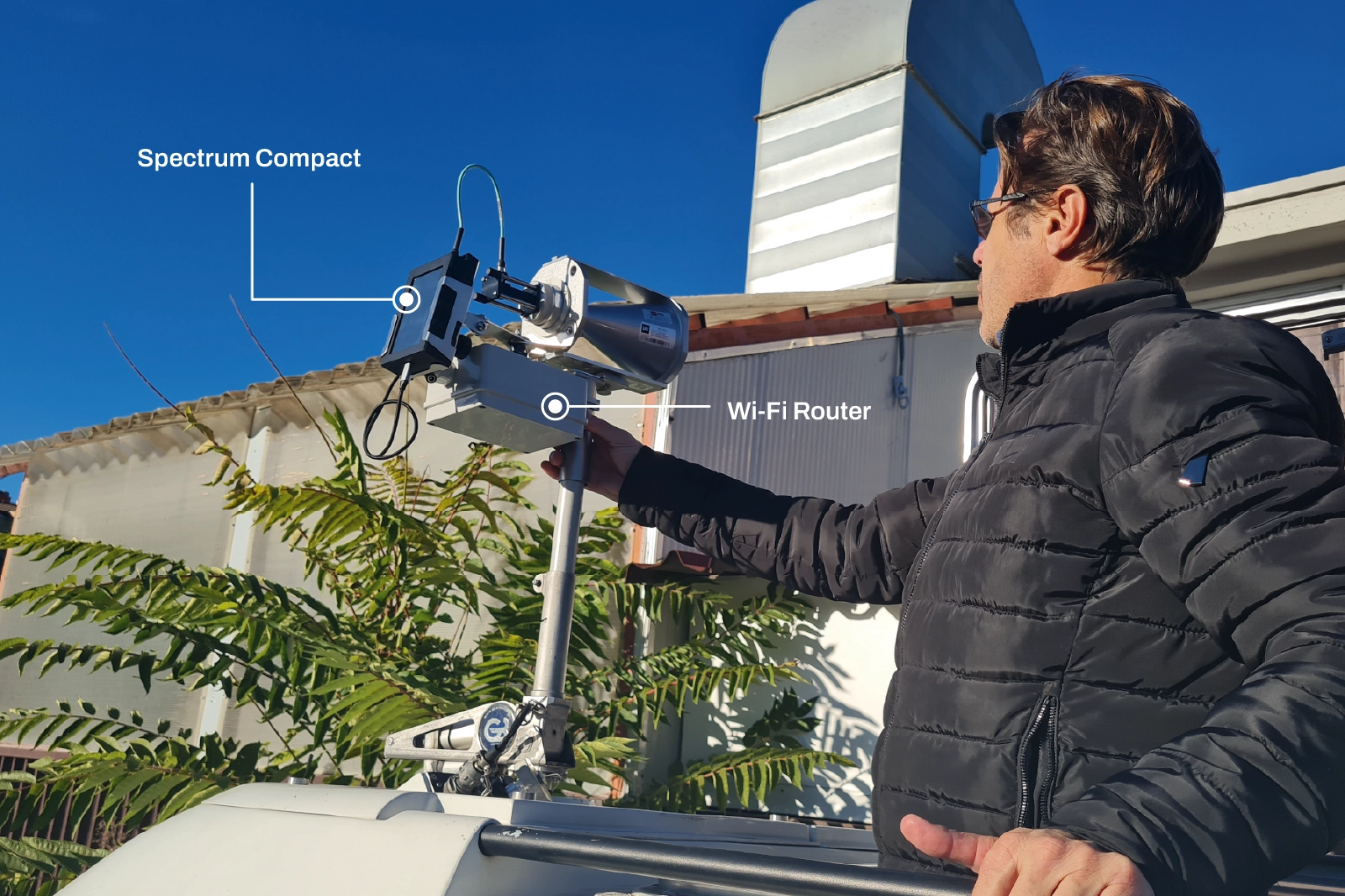
Spectrum Compact gives engineers portable, precise insight into the RF spectrum. On-site analysis allows interference to be identified immediately, signal integrity to be verified, and compliance to be maintained. Take action before issues reach the air.
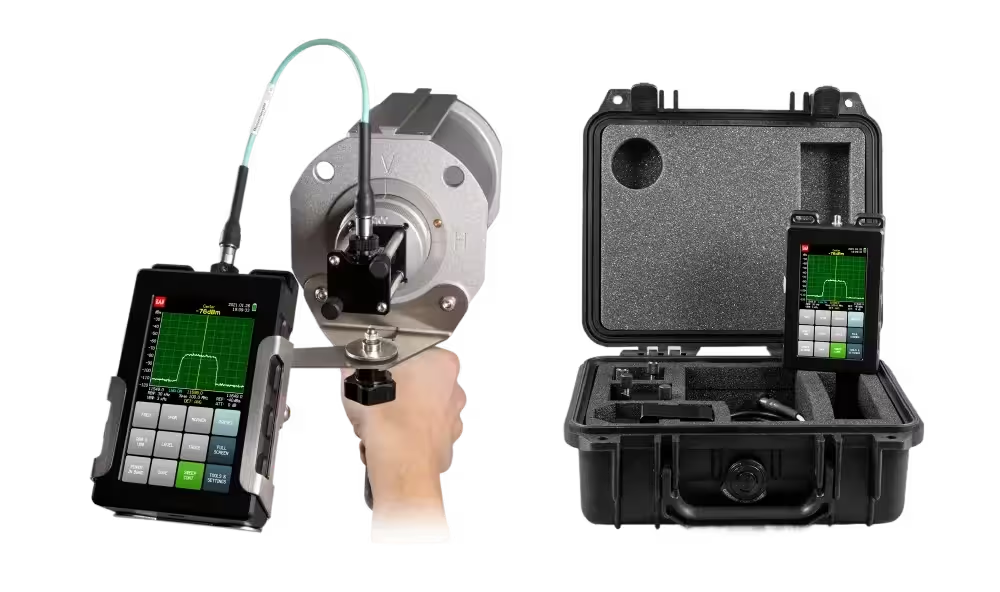


With real-time spectrum insight, engineers can spot interference before it disrupts live feeds, keep contribution links and temporary deployments stable, and focus on optimizing operations rather than chasing problems. Monitoring becomes proactive, and critical broadcasts proceed smoothly with consistent quality and compliance, reducing stress and uncertainty across the team.
Without comprehensive spectrum visibility, engineers may spend hours tracking intermittent interference, causing delays and operational strain. Temporary deployments and live events become vulnerable to unexpected signal issues, and routine monitoring remains reactive. Maintaining broadcast quality and compliance is more difficult, raising the risk of on-air disruptions and operational uncertainty for both the team and stakeholders.
.webp)
Broadcasters such as Rai Way reduced interference detection from one week to just half a day by incorporating portable spectrum analysis into their workflow. Its compact design supports live events, temporary deployments, and studio-to-transmitter links, helping teams work efficiently and with confidence.